Our Story
POPS has supported families of prisoners since 1988, challenging stigma and empowering families as advocates for change. Working in prisons and the community, providing vital services, we ensure no family faces this journey alone.
From Humble Beginnings to a Lifeline for Families
The journey of POPS began in 1988 with a simple but profound realisation. Farida Anderson MBE, who was herself navigating the challenges of supporting a partner through a custodial sentence, saw that there was a critical gap in support for prisoners’ families. Farida understood firsthand the stigma, isolation, and the often, overwhelming experience of being treated as “guilty by association” experienced by families and was determined to change it.
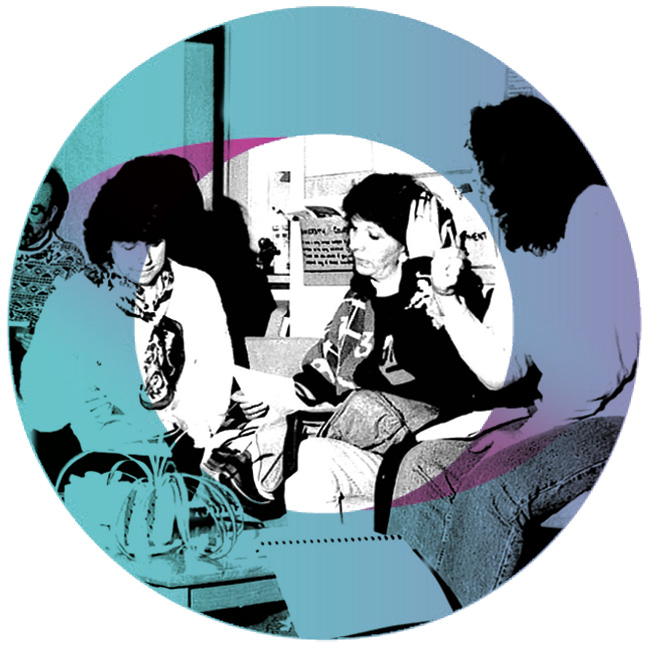
“I found myself in an impossible situation about 20 years ago,” Farida recalls. “When my husband was sentenced to prison, I didn’t know where to turn, who to talk to, or even how to cope with the overwhelming sense of isolation. So, I did what seemed natural—I put an advert in the local paper and started a self-help group. It was a space for families, like me, who were trying to make sense of a painful reality.”
Strangeways Riots
What began as a small peer support group soon grew into something much larger. In 1989, POPS was officially registered as a charity, and the following year it became a member of the Federation of Prisoners’ Families Support Group. In 1990, the Strangeways riots—a 25-day rooftop protest and uprising at HMP Manchester—grabbed national attention and highlighted the appalling conditions faced by prisoners, as well as the poor treatment of prisoners’ families. During this chaotic period POPS were on hand to provide support to prisoners’ families distressed at being unable to make contact with their loved ones inside the prison.
The Woolf Report
The Strangeways riots ultimately led to the Woolf Report, a public inquiry that revealed the intolerable conditions in the UK’s prison system and called for significant reform. POPS was proud to contribute to the report, giving voice to families who were so often overlooked. The charity’s contributions in the aftermath of the riots marked a pivotal moment in its journey, cementing its place as a key advocate for prisoners’ families across the country.
In the years that followed, POPS continued to evolve. In 1991, the charity expanded its work by launching a court-based family support project at Manchester Crown Court. POPS also began providing training for prison staff to raise awareness about the unique needs of prisoners’ families and campaigned for improved visiting conditions both regionally and nationally.
Black Prisoner Support Group
By 1992, in response to concerns raised by families, POPS had established the Black Prisoner Support Group. This initiative worked with several prisons, including HMP Lindholme and HMPYOI Moorland, to support Black prisoners in raising matters of racial inequality within the prison, enhancing knowledge and value of their diverse cultural heritage and increasing their chances of positive progression through their sentence. The group’s work led to numerous innovative projects, including a landmark piece of research called “Black Voices – telling us how they feel”—and the Reconnect project, a community-based project, support men BAME men returning after serving long sentences.
HMP Hindley Visitor Centre
Around the same time, POPS began offering its first Visitor Centre Service in partnership with HMP Hindley, providing support and decent facilities for families, whilst visiting their loved ones in prison. POPS was also commissioned to undertake a regional review of visitor centre services on behalf of the prison service at the time. This review led to improved services to families, influenced by decency, and provided all families with a welcoming environment to start their visit to their loved one.
So much more to do…
Today, POPS is a lifeline for families across 15 prisons and in the community. From the early days of supporting a handful of families, we have grown to provide a continuum of care—from peer support to advocacy, practical assistance, and emotional help. Our mission remains as vital as it was in 1988: to support and empower families, eradicate stigma, and provide a safe space for those navigating the difficult realities of having a loved one in prison.
We’re incredibly proud of how far we’ve come, but we know that there is still much work to be done. And we’ll continue to be there for every family in need, offering hope, support, and a sense of community.