
Children & Young People

Children and young people whose parents or family members are involved in the criminal justice system face unique challenges.
Supporting Children Affected by the Criminal Justice System
Children and young people affected by the criminal justice system often experience feelings of confusion, stigma, and isolation, which can affect their emotional wellbeing and future opportunities. At POPS we are dedicated to providing a range of supportive services designed to help children cope and thrive, despite their circumstances.

What We Do
We offer practical and emotional support to children and young people, providing them with the tools and resources they need to overcome the challenges they face. Our services are child-centred, family-focused, and trauma-informed, with a commitment to helping each child develop resilience and maintain a sense of hope.
Key services include:
Child-friendly visits:
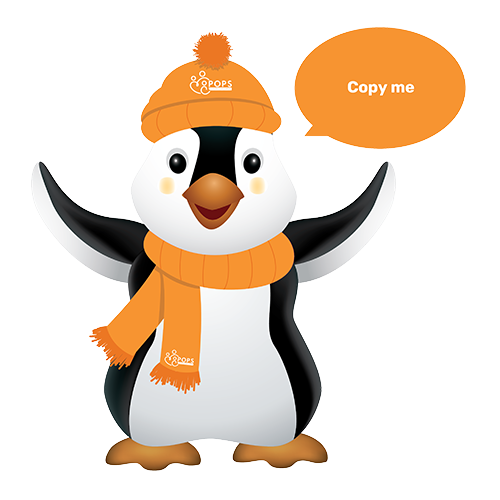
We provide emotional and practical support for children on social visits and family days at all the prisons where we operate. Our Popsicle the Penguin mascot guides children visually through the booking in and security processes helping reduce anxiety and reduce distress. Our play workers engage children in our well-stocked play areas providing space for children to play and relax. Children can also access our Table Top Box scheme giving them the opportunity to engage in play and activities with their imprisoned loved one in situ at the visits table.

Child-friendly information:
Our prison-specific ‘Visiting dad’ booklets take children through each step of the visits process and beyond into dad’s daily routine and all the places he might visit in the prison. We know that children often struggle with anxiety related to the visual image they have of prisons, emerging from medieval depictions in story books or negative stories in the media. Guided by Popsicle the penguin, children get to see real images of the prison they are visiting helping to reduce anxiety and improve mental wellbeing.
Download the ‘Visiting Dad’ booklet for the prison you are visiting by going to our Prison-based support page and selecting the individual prison page.
Child-centred research:
POPS places a priority on children’s voices being heard in research about them. POPS’ involvement in the international COPING study published in 2013 ensured children and young people from the UK got to have their say about the impact of parental imprisonment on their mental wellbeing, influencing national and international policy.
Promoting children’s rights:
We are a UK partner of Children of Prisoners Europe (COPE) a European-wide initiative on behalf of children with an imprisoned parent. As a partner organisation, POPS, alongside other European partners, seek to boost awareness and achieve new ways of thinking, acting and interacting on issues concerning prisoners’ children.
Training for professionals:
Our face-to-face and online training offer enables professionals from all sectors to better understand and actively support children navigating the impact of having a parent in prison. Whether this be contributing to school inset days, delivering lectures to social work students or delivering training to Early Help Teams, POPS passionately believe supporting children affected by the incarceration of a relative is everyone’s responsibility!
Support for Families:
We believe that strong family support is crucial in helping young people thrive. We work closely with families to improve communication, strengthen relationships, and ensure that children have a strong support system at home. This holistic approach helps to create a positive environment for young people both during and after the time their family member is incarcerated.
Signposting to Other Services:
We understand that children and young people may need additional support, whether it’s for mental health, housing, or other issues. We help connect them to relevant services that can offer further assistance.

Why It Matters
Children and young people affected by parental imprisonment are at risk of a range of emotional and social challenges, including low self-esteem, mental health difficulties, and academic underachievement. However, with the right support, these young people can overcome these barriers and go on to lead fulfilling, successful lives.
If you or someone you know is in need of support, please contact us today to find out more.
Your Voice
It is vitally important that children’s voices are heard in all areas of policy and practice to ensure services accurately and sensitively reflect their needs. Collaborating with children and other partners POPS has produced a variety of resources which aim to promote children’s voices and ensure information is accessible to a younger audience’:
'Because it's our right'
POPS is a UK partner of Children of Prisoners Europe (COPE). COPE is a European-wide initiative on behalf of children with an imprisoned parent. The European partners seek to boost awareness and achieve new ways of thinking, acting and interacting on issues concerning prisoners’ children.
In 2015 POPS supported COPE in the development of a child rights awareness-raising video ‘Because it’s our right’, centred around Article 9 of the United Nations Convention on the Rights of the Child. The animation is aimed at children aged 8 – 12 who have a parent in prison. The video explains to them that they have the right to be in contact with their parents, unless this is contrary to the child’s best interests, and to show that there are many different ways to stay in contact with their parent even when they are in prison.
We are the Golden Thread
In 2017 Lord Farmer published a landmark review which demonstrated the importance of good family relationships to prisoners’ rehabilitation. Research from the Ministry of Justice shows that reoffending rates are 39% lower for a prisoner who receives visits from a family member, compared to those who do not. The report centred on a simple principle of reform: ‘relationships are fundamentally important if people are to change.’
Lord Farmer described the importance of family ties as a ‘golden thread’ which should be woven through all prison policy and practice. The Farmer Review concluded that:
‘Supportive relationships with family members and significant others give meaning and all important motivation to other strands of rehabilitation and resettlement activity.’
‘Family work should always be seen and referred to alongside [employment and education] as the third leg of the stool that brings stability and structure to prisoners’ lives.’
In order to raise awareness amongst prisoners’ families of the Farmer Review, and as a response its recommendations, POPS asked children and their families from across the North-West to send us a postcard and tell us:
- What they miss?
- What family means to them?
- What would be their one wish?
The families’ responses were woven into this short film entitled #WearetheGoldenThread to continue the cycle of awareness raising amongst professionals. The short film was launched at the ‘Keeping Children Connected’ conference on June 8th, 2018. The postcards were also displayed as part of the conference to encourage personal reflection on how we might all ‘Think Family, Build Family and Listen’.
Concept and Direction:
Rebecca Cheung, POPS
Video Production:
Northern Spark Productions https://northernsparkproductions.com/
Children of Prisoners and Technology
An estimated 2.1 million children across Europe have a parent in prison. As well as the loss of a parent children with a parent in prison may experience stigma, trauma and anxiety which may impact their emotional and physical well-being and their personal development.
In 2018 the Council of Europe issued policy guidelines to its 47 member states aimed at safeguarding the rights of children of imprisoned parents. The policy guidelines reaffirm that children with a parent in prison are entitled to the same rights as other children, including regular contact with their parents if this is in their best interests.
Like most guidelines they have been written by adults for adults. But what would they look like if children rewrote them…
In 2018 COPE (Children of Prisoners Europe) approached their members to look at how we might as a collective involve children in rewriting the recommendations in child friendly language. As co-hosts of the ‘Keeping Children Connected’ Conference (hosted in Manchester in 2018) POPS delivered the first example of this project as part of the conference programme, tackling two of the guidelines concerning the use of technology in maintaining contact.
This short film describes this process and the children’s final interpretation of the guidelines.
To read the original ‘Recommendation CM/Rec(2018)5 of the Committee of Ministers to member States concerning children with imprisoned parents’ visit: www.coe.int.
To view the child-friendly guidelines as they are produced visit: www.childrenofprisoners.eu
With special thanks to all the children involved in the forum for their time and contribution.
Concept and Direction:
Rebecca Cheung, POPS
Video Production:
Northern Spark Productions https://northernsparkproductions.com/